

Industry surveys keep finding the same thing: marketers spend around a fifth of their working time on reporting. For a while, we were no exception. Every month, one of us would log into Google Ads, then Google Analytics, then Search Console, then Meta, then LinkedIn, then a client’s Shopify store, export a pile of spreadsheets, and stitch the numbers into a deck by hand. It was slow, it was easy to get wrong, and the data was stale by the time the report existed.
So over the past year we built a system that automates the assembling and puts an AI analyst on top of it. This is a plain-English account of how automated cross-channel marketing reporting actually works, what it takes to build, and where it is worth doing yourself versus buying a tool.
Why is marketing reporting so hard to automate?
The trouble is not any single platform. It is that a real marketing picture lives across a dozen of them, and none of them talk to each other. Your paid search data is in Google Ads. Your site behavior is in Google Analytics. Your organic search data is in Search Console. Then Meta, LinkedIn, Microsoft, TikTok, and the rest each hold their own slice.
Pulling one platform’s numbers is easy. The hard part is doing it for all of them, on a schedule, and getting the results to line up into a single, trustworthy story. That is the problem automated cross-channel reporting has to solve.
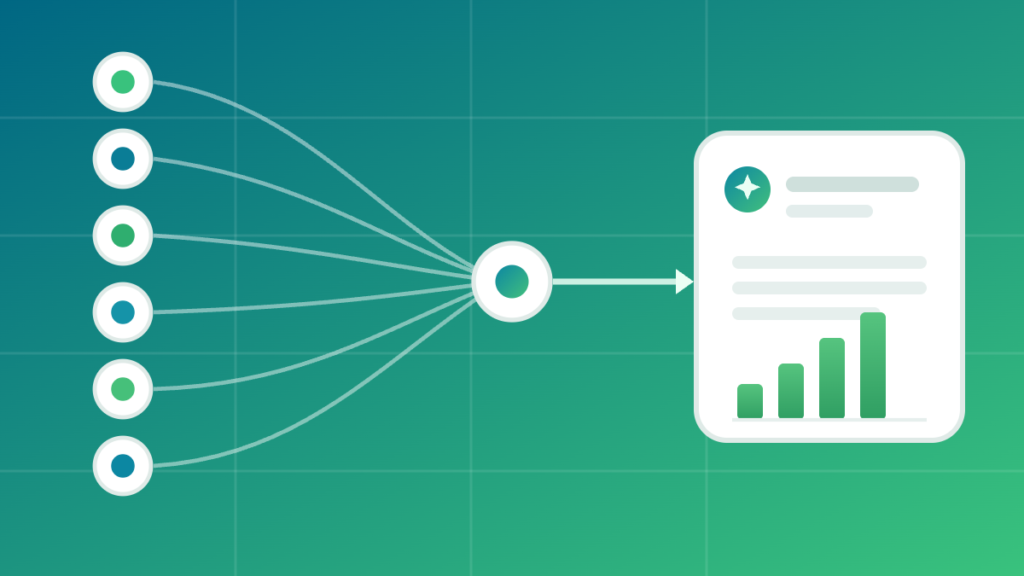
How do you connect all your marketing platforms into one report?
Every platform offers an API, which is a way for software to request data directly instead of a person logging in and exporting files. Connect to each platform’s API and you can pull a client’s whole picture into one place on demand.
Under the hood, almost every automated reporting pipeline follows the same four steps:
- Authenticate to each platform once.
- Map each client to their specific accounts, their Analytics property, their Google Ads account, their ad accounts.
- Pull the data on demand or on a schedule.
- Assemble it into a report.
We built ours around Claude Code, Anthropic’s coding environment, so the data-pulling and the analysis live in the same place. It is multi-client from the ground up: each client is its own configuration, and the system auto-discovers any new one we add. By the end we had connected search and analytics (Search Console, Analytics, Bing), the paid channels (Google, Meta, LinkedIn, Microsoft, Pinterest, TikTok, Reddit), commerce (Shopify and Google Merchant Center), video and social listening (YouTube and Reddit mentions), and the AI search engines themselves.
The hardest part is authentication, not the data
Here is what the tool roundups skip. The genuinely hard work of connecting a platform is almost never pulling the data. It is the authentication.
Every platform guards its API differently. The Google properties (Ads, Analytics, Search Console, Merchant Center, YouTube) use OAuth2, where you generate a refresh token once through a consent flow and use it to mint short-lived access tokens on each run. LinkedIn, Bing, Microsoft Ads, Pinterest, TikTok, and Reddit each have their own version of that dance, with their own quirks. A few just want an API key. Shopify wanted a separate token per store.
So a real part of the build was writing small one-time helper scripts, one per platform, that walk each authentication flow and produce a credential the system reuses forever after. It is unglamorous plumbing, and it is exactly the point where most people give up and rent a dashboard instead. Once it is done, it is done, and every future report runs on it quietly.
Why don’t the numbers match across platforms?
Pulling the numbers is one thing. Getting them to mean the same thing is where the real analysis lives, and it is what separates a trustworthy report from a confident, wrong one.
Platforms do not agree on basic definitions. They count conversions on different dates, use different attribution windows, and each quietly takes credit for as much as it can. Google’s Performance Max reports under a channel that does not line up cleanly with the others. Branded search claims conversions from people who were already coming to you. Glue the raw numbers together without care and you will report growth that was never real.
The whole reason to connect everything is to answer the questions no single platform can: your blended cost per acquisition and your true return on ad spend across the entire budget, not per-channel vanity figures. So we built our own measurement rules in rather than trusting each platform’s framing. The system separates demand a client already owned from demand their marketing created, attributes conversions by the date they actually happened, and flags spikes of bot and junk traffic instead of counting them as wins. Those rules came from patterns we kept hitting on real accounts.
Can you trust AI to write a marketing report?
This is the question people ask most, and the honest answer is: only if you build it carefully.
In our system, the AI model receives the actual numbers the pipeline pulled, not a vague prompt, and writes the analysis: what moved, why it likely moved, and what is worth considering next. Because it reads real data rather than recalling anything, it describes what is genuinely in the account.
The obvious risk is that an AI can state a wrong number with total confidence. We guard against that two ways. The model only ever works from the data the system actually fetched, so it is not inventing figures. And a person reviews every report before it goes anywhere. The AI makes the work faster and lets us see far more than we could by hand. It does not get the final say.
Can it report on AI search, not just Google?
Yes, and this is the newest piece. Because the same setup can query ChatGPT, Gemini, and Perplexity through their APIs, we can ask those tools the questions a client’s customers would ask and record whether the client shows up in the answer. We can also inspect a website the way an AI shopping agent would and score how ready it is to be understood and used by one.
Very few reporting tools do this yet, because the ground is only a year or two old. Building on an AI environment in the first place made it a small addition rather than a separate project.
Should you build your own, or use a tool like Funnel.io or DashThis?
For most businesses, the honest answer is: use a tool. Platforms like Funnel.io, DashThis, AgencyAnalytics, and Whatagraph connect dozens of sources, keep dashboards updated, and cost far less than the time it takes to build and maintain your own. If you want reliable dashboards and nothing exotic, buy one.
We built our own for three specific reasons. We wanted our own measurement rules baked in, not a platform’s default framing. We wanted narrative and recommendations written from the data, not just charts. And we wanted to report on things no off-the-shelf tool covers yet, like visibility inside AI answers. If none of those matter to you, building is not worth the effort. If all three do, it is.
What we learned building it
A few things stood out.
Most of the difficulty lives in the seams: authentication, mismatched definitions, and honest measurement, not the AI part. The AI layer was the fastest piece to build and the last to matter, because it is only ever as good as the data underneath it. And a small team can now maintain something that used to take a department, because the tooling does the fetching and assembling while the people do the judging.
We are still adding to it. But the core does what we set out to do. It turns a week of copy-paste into a few minutes of pulling, and it turns a pile of charts into a report that actually says something.
Frequently asked questions
How long does automated marketing reporting take?
Once the connections are built, a report that used to take hours of manual work runs in minutes. The upfront setup, mostly authentication, is the real time cost, and you pay it once per platform.
What platforms can you connect to a marketing report?
Any platform with an API, which today is nearly all of them: Google Ads, Google Analytics 4, Search Console, Meta, LinkedIn, Microsoft and Bing, TikTok, Pinterest, Reddit, Shopify, Google Merchant Center, YouTube, and the AI search engines.
Do you need to know how to code to build this?
To build your own, yes, or you need a tool that handles it for you. The off-the-shelf platforms exist precisely so non-technical teams can get cross-channel reporting without writing anything.
Is AI-written reporting accurate?
It is accurate when the AI reads real, fetched data rather than generating figures, and when a person reviews the output. Treat an unreviewed AI report the way you would treat an unreviewed junior analyst’s first draft.
What is cross-channel marketing reporting?
It is combining data from every channel you use, paid, organic, social, and commerce, into one view so you can measure how they work together, including blended cost per acquisition and true return on ad spend.